Why Soil Mix Matters in Bags
In bag gardening, the soil is entirely confined within a small volume. Unlike in-ground beds, roots cannot extend outward to find nutrients or moisture. This makes the composition and quality of the soil mix one of the most important factors in plant health.
Standard garden soil is generally not suitable for bags. It tends to compact over time, restricting root growth and reducing drainage. A well-formulated potting mix maintains a loose, airy structure throughout the growing season.
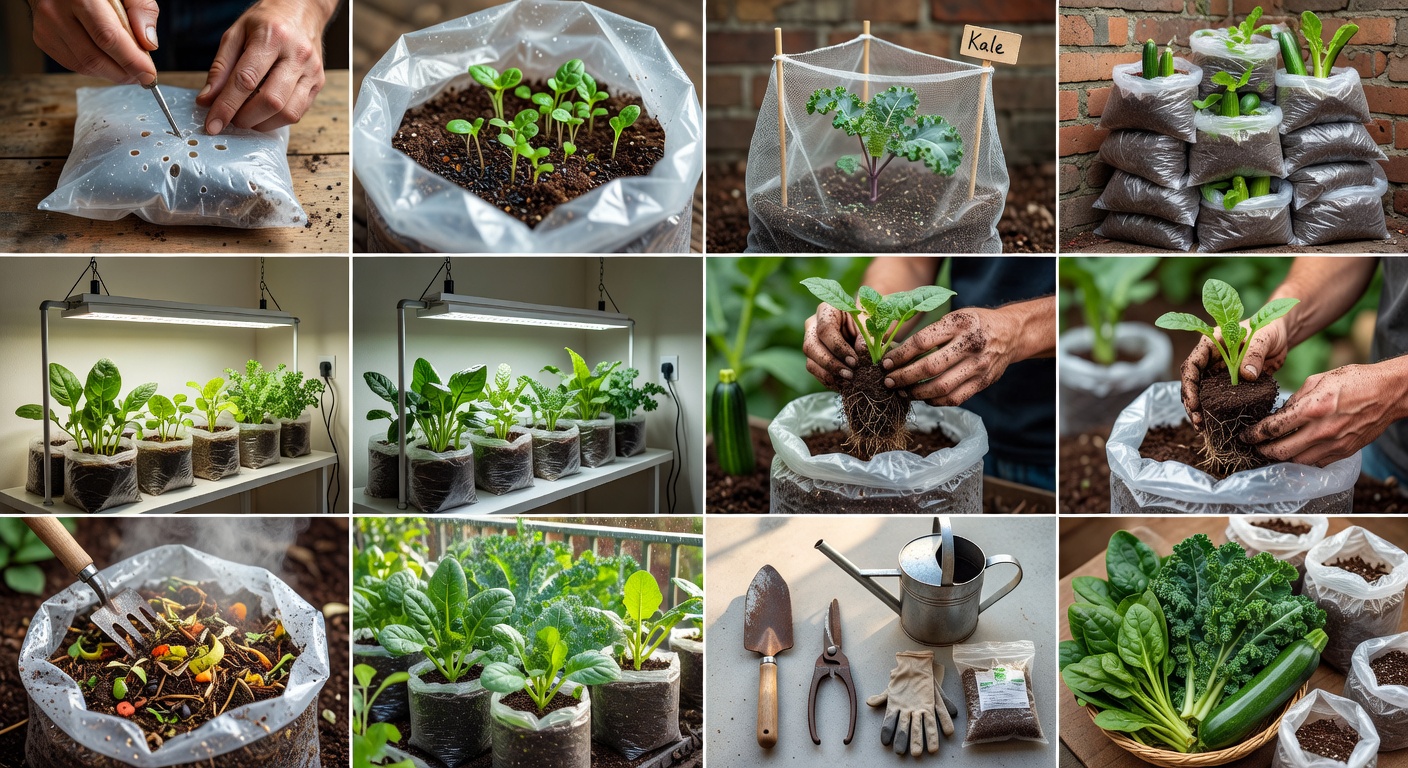
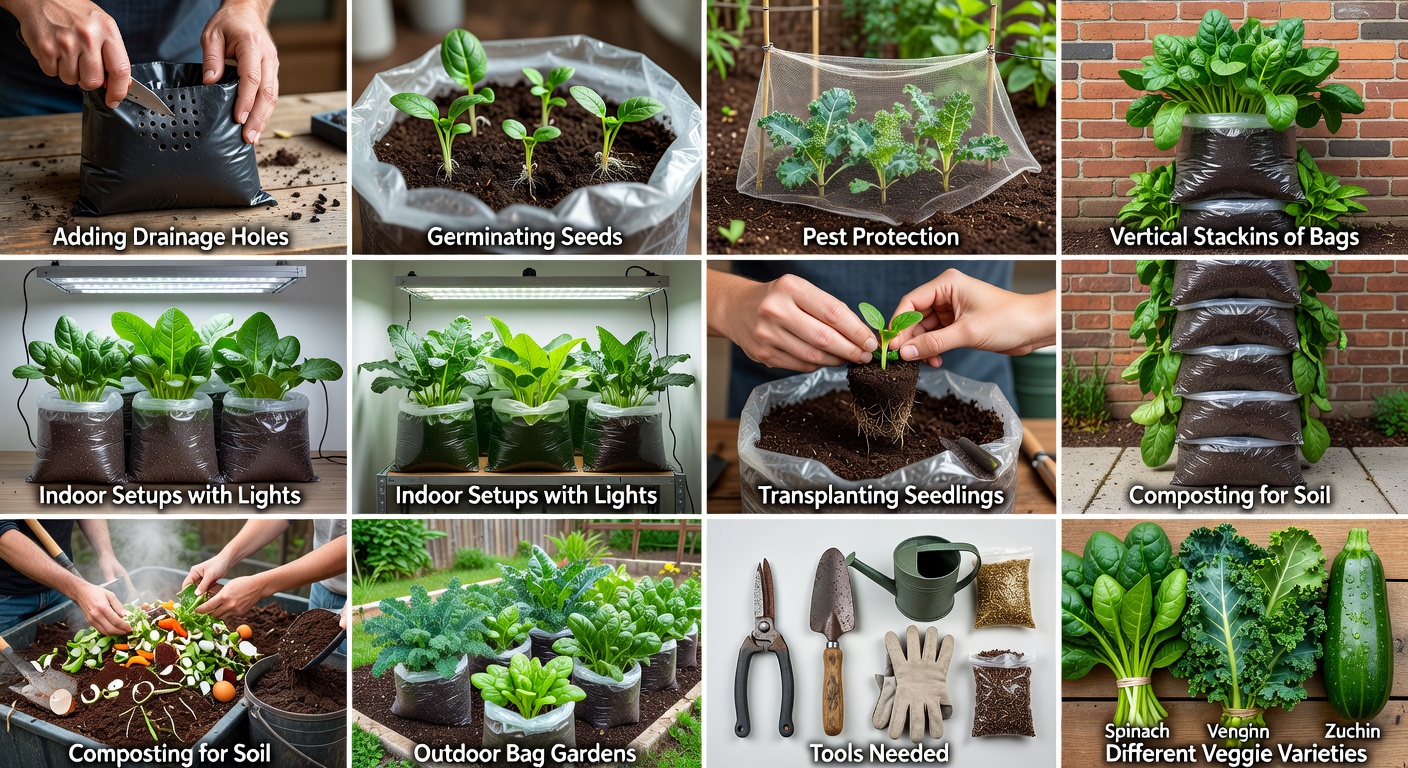
Recommended Soil Mix
The following blend is suitable for most vegetables grown in plastic bags. Proportions are given by volume and can be adjusted slightly depending on the specific plant or local climate.
| Component | Proportion | Function |
|---|---|---|
| Quality potting mix | 50% | Base growing medium; provides structure and nutrients |
| Compost (mature) | 30% | Adds organic matter and slow-release nutrients |
| Perlite or coarse sand | 15% | Improves aeration and drainage |
| Coconut coir | 5% | Retains moisture without compaction |
Mix all components together in a large container or on a tarp before filling bags. This ensures even distribution and avoids layering, which can create drainage problems within the bag.
Drainage
Drainage is a critical consideration in bag gardening. Without adequate drainage, excess water accumulates at the bottom of the bag, causing root oxygen deprivation — a condition known as waterlogging. This leads to root rot and plant death within a few days.
Key measures to ensure proper drainage:
- Drainage holes: Cut 8–12 holes (1–2 cm diameter) in the bottom and lower 5 cm of each bag before filling.
- Elevated placement: Set bags on bricks, wooden pallets, or slatted surfaces to allow water to exit freely beneath the bag.
- Gravel base layer (optional): A 3 cm layer of coarse gravel or perlite at the bottom of the bag can further improve drainage in very wet conditions.
- Soil texture check: If the soil mix compacts over time, loosen it gently with a thin stick before watering to allow water to penetrate evenly.
Understanding pH
Soil pH affects how readily plants can absorb nutrients from the soil. Most common vegetables prefer a slightly acidic to neutral pH range of 6.0 to 7.0. In a bag system, pH can drift over time due to fertiliser use and watering.
Inexpensive soil pH test kits are available at garden centres. If pH is below 6.0, adding a small amount of garden lime (calcium carbonate) can raise it. If pH is above 7.5, adding sulphur or acidic compost can gradually lower it.
Tap water in some areas is alkaline (pH 7.5–8.5), which can gradually raise soil pH when used for regular watering. If using alkaline tap water, consider testing soil pH at the start of each growing season.
Fertilisation
Nutrients in a bag are finite. Unlike in-ground soil, there is no surrounding ecosystem continuously adding organic matter. Regular fertilisation is therefore necessary, particularly for fruiting vegetables with high nutrient demands.
Types of Fertiliser
| Type | Release Rate | Best For | Application |
|---|---|---|---|
| Slow-release granular | 2–6 months | Long-season crops (tomatoes, peppers) | Mix into soil before planting; re-apply every 2–3 months |
| Liquid balanced (NPK) | Immediate | All vegetables, especially leafy greens | Dilute as directed and apply every 1–2 weeks during growth |
| Liquid tomato fertiliser | Immediate | Fruiting crops (tomatoes, cucumbers, peppers) | Apply when flowering begins; high potassium supports fruit development |
| Worm castings | Slow-medium | All plants; particularly seedlings | Mix 10–15% into soil blend or use as top dressing |
Fertilisation Schedule
- At planting: Mix slow-release fertiliser or compost into the soil blend
- Weeks 2–4: Begin liquid fertiliser once plants are established
- Ongoing: Apply liquid fertiliser every 7–14 days throughout the growing season
- Flowering stage: Switch to a higher-potassium formula for fruiting plants
Too much fertiliser — particularly nitrogen — causes excessive leaf growth at the expense of fruit production, and can cause fertiliser burn (yellowing or browning of leaf edges). Always follow the dosage instructions on the product label.
Refreshing Soil Between Seasons
After each growing season, the soil in bags becomes depleted of nutrients and may become compacted. Before replanting:
- Remove plant roots and debris from the bag
- Add 20–30% fresh potting mix or compost to replenish volume and nutrients
- Mix well and allow to settle before planting
- Check and adjust pH if necessary
For more information about watering techniques and moisture management, see the Watering & Care guide.